Showing posts with label adsense. Show all posts

Monday, 31 December 2007

Google Adsense in Blogger, and inline too

I have an article telling how to insert Google ad in blogger's post which involvels template change and my transform module. I have just discovered that there's a much more easy way to do this. What a pity I haven't seen it comming sooner.

Here's all you need to do:
  1. Log into your Blogger account at http://www.blogger.com .
  2. Visit your blog's Template tab and click on the Page Elements link.
  3. Click Edit in the Blog Posts section.


  4. Check the box next to Show Ads Between Posts. You can then select how often you'd like your ads to appear, such as once after every post or once after every other post.


  5. Customize the ads and click on Save Changes when you're done.
Please note that right now, it's only possible to insert Google ads using this widget, and not AdSense for search boxes or referral units.

For more detailed instructions, please visit Blogger's Help Center. Lastly, don't forget to check out our blog optimization tips for ways to improve your ad performance.

Easy huh? Link to this post to let your friends know. Happy new year! :)

Saturday, 29 December 2007

Making AdSense fit your forum site

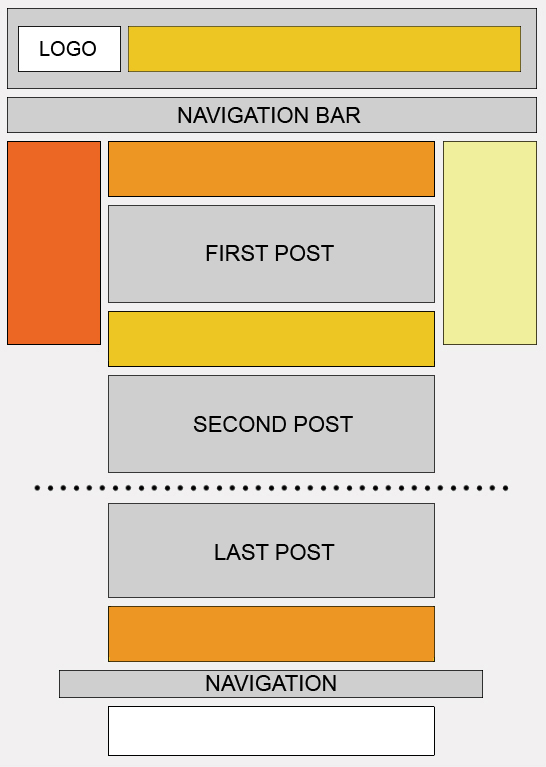
When you run a forum site, ad placement and formats are key to designing ads that will be successful but not intrusive to your regular users.


Map

Placement: Display your ad units where repeat users will notice them


  • Because forum regulars tend to skip the header and go straight to the meat of the thread, placing your ad unit above or below the first post can be more effective than ads next to the logo.


  • Place a leaderboard immediately after the last post. This provides users who make it to the end of a thread with a 'next step' when the content ends. Try to avoid placing it after the footer, though, as your readers will likely move to the next thread without seeing the ad.


Formats: Adapting your design for multiple ad units and limited space.


  • Using multiple ad units, you can use a variety of formats to fill ad space throughout your site. Placing a skyscraper above the fold on the left side of your forum seems to produce slightly better performance than other positioning. However, when using multiple ad units throughout the page our horizontal bias still favours the leaderboard. Our heat map provides more details.


  • Use horizontal link units, which are small enough to fit near the top of your forum just below the header. For the regular forum visitor, link units offer a wider range of relevant topics to browse.


However you choose to implement your ads, keep in mind that forums are highly interactive sites with regular users. Be sure to blend the ads nicely, so they do not appear overly intrusive, but do not blend them so well that they mislead your users! Every forum site is different and you know your community best, so as always use your own judgement to create the most positive experience for your users.


Tip for making the most of revenue opportunities: Like most sites, forums can benefit from opting in to image ads. Supporting image ads increases the pool of ads, particularly cost-per-thousand-impression (CPM) ads, bidding to display on your site. Since forums tend to have lower click-through rates than other types of sites, CPM ads can improve revenue without the need for clicks. Keep in mind, however, that CPM ads come in both text and image formats.

Wednesday, 19 December 2007

6 Ways to Make Money Blogging

1) Cost-Per-Click (CPC) Advertising Programs
CPC advertising programs are the best money making programs for most of the bloggers. They are suitable to all kind of blogs with family-friendly content regardless of their traffic level and age. CPC programs work well on blog because they display contextual ads that are highly relevant to blogs content and bloggers will earn anywhere between 10 cents to 50 cents for each contextual ads click by their visitors. With proper CPC ads optimization and consistent amount of traffic, a blogger can earn a steady amount of money displaying CPC ads on his/her blog.
is no doubt, the undisputed king of CPC advertising programs and Yahoo Publisher Network is the closest alternative of AdSense.

2) Cost-Per-Action (CPA) Advertising Programs
CPA programs is quite similar to CPC programs except CPA programs don't pay bloggers for each click on the CPA ads hosted by bloggers. The blogger only makes money when the visitor takes an action on the CPA advertiser website. The action can be a sign up, making a purchase, generating a lead, downloading a product and more. CPA networks pay a lot more than CPC programs, for a visitor sent by the blogger from his/her blog to a CPA advertiser website and the visitor taken an action on the advertiser site, the blogger can earn few dollar to fifty dollar depend on the niche. But CPA ads tend to work well on large traffic blogs only. AzoogleAds.com, Commission Junction and Advertising.com are some of the largest CPA networks. They are good payer currently. Good way to make extra money together with CPC.

3) Promote Affiliate Programs
Marketing affiliate programs is very common nowadays. You sign up with affiliate program of an online company, then decide whether to use the company's text link or banner ads on your blog to promote the company's products or services and earn affiliate commission when a visitor make a purchase through your affiliate link. Affiliate programs can be promoted without a website and blog too.

4) Pay Per Post Programs
Pay per post programs started last year. The programs pay bloggers to write a blog post about a sponsor's website. The paid blog post can be a review or an introduction on the advertiser's website, products or services. The blogger will be paid a least $5 for each sponsor post. Blogs that have massive traffic, high Google PR and large number of subscribers can charge a few hundred dollar for just writing one sponsor post.

The downside of pay per post is that writing too many sponsor posts that are not relevant to your blog content can seriously affect your traffic.

5) Sell Text Link Ads
Selling text links on your blog can be a great source of additional online revenue. It is not difficult to get started, just go to to sign up an account (and get $100 free), then decide which part of your pages you want to display paid text links, set your price and you are ready to take order. Text-link-ads.com will handle all the promotional works. Another company that offers the similar services as Text-link-ads.com is Reverselinks.com

6) Hosting Web Poll
Vizu Answer offers a pretty new way to monetize your blog's and website's traffic. The pays the publishers on a cost-per-thousand impression (CPM) basis for hosting targeted web poll. The money a blogger can earn from hosting poll is depending on the page views. The more page views, the higher the earning

Tuesday, 18 December 2007

Tips to Join Google Adsense

Before you go and join Google Adsense, read this to improve your chances of getting accepted.


Google "screens" all websites, before they get accepted into the Google Adsense program. This is to ensure that your website complies with Google's Adsense terms. It has been argued by several people that the Adsense screening procedure consists of two steps:


  • Step1 : All new applications are screened by a Google robot "bot". It checks the content of your site, and the number of pages within your site, and a few other factors important to Google.

  • Step2 : If the "bot" gives an initial "ok" for your site, it is then quickly reviewed by a Google employee, that finally decides if your website can be accepted into the program.


You then receive a welcome e-mail from Google's Adsense team, and you are ready to start serving Google Adsense ads on your website.


In case that your website is not initially accepted into Google's Adsense program, don't despair!


You will be notified by Google's Adsense Team that your website cant be accepted into the program at the moment, including one or more reasons why. At this point you should closely watch the reasons stated, and make the necessary changes to your website, and then reply to the e-mail and ask for a re-evaluation.


Evaluation of your application usually takes from minutes and up to 48 hours.


Improve your chances of getting accepted into Google Adsense:


You can, and should, pay close attention to the following, and make sure that your website meets the following BEFORE applying to Google Adsense.


  • Make sure that your website has original content, which means your pages should contain valid information - not link farms!

  • Create 10-15 pages of content, each with different information about your websites subject.

  • Create title, meta tags, and headline "<H1> for each page.

  • Order a domain to hold your pages, free hosts are more unlikely to get accepted.

  • Make an easy to use navigation.

  • Include a sitemap on your website, that clearly identifies each page and a small paragraph on each page.

  • Include a contact, disclaimer, and privacy policy page on your site.

  • Make sure that your website doesn't include content that are not allowed by Google Adsense.

  • Don't serve other text bases ads (other adsense similar programs).


Pay close attention to Google's Adsense terms, and make sure that you understand it - then make changes to your site that you think might be in violation.


If you try to follow the above steps, you are likely to get accepted, even though we can't give you any guarantees!


Friday, 14 December 2007

Before you apply to AdSense

Getting started with AdSense is easy, but when reviewing the applications we get, we've noticed a few common pitfalls. To help make sure your application is approved the first time around, ask yourself the following questions below before submitting.

Do I have what I need to apply?
  • Website: To display Google ads, you need administrative access to the site you submit for AdSense in order to place our JavaScript ad code on your site. Adding the Google code to your site's source code will enable you to show ads, search boxes, and referral units on your pages.

    If you don't have a website of your own, that doesn't mean you can't participate in AdSense. We offer a couple of options to help you easily create your own site.

    First, there's Blogger, a free tool for setting up and publishing your own blog online. With its easy-to-use and customizable templates, you can create an account and start blogging right away. You can also set up AdSense ads easily through your Blogger account.

    If you prefer more flexibility and control, then our web page tool, Page Creator, may be more suitable. Signing up for a Page Creator account is free as well -- all you need is a Gmail account. The best part is that you don't have to download any software or hire a designer. Once you've created your Page Creator site, you can begin displaying Google ads in minutes.

  • Valid payee name: Payments will be made out to the name on your account, so make sure to include your full and valid name, or that of your business, rather than just initials. If banks won't accept the name you enter in the 'Payee Name' field, neither will we.

  • Valid address: We want to make sure your hard-earned money reaches you, so please also provide a complete valid address where you can receive mail. If you live in a country or territory that doesn't have a standard format for addresses, please be sure that your application includes as much information as a mailman would need to find your residence.
Does my website meet all the necessary requirements?
  • Valid URL: If you manage an entire website, give us the URL of your home page. If you manage a blog or other account within a larger website, you should provide the URL of the specific page that you manage and not the URL of the entire hosting website. Don't forget to double check your URL for typos!

  • Fully launched website: Since we won't be able to review websites that are not fully launched or built, please ensure that your site is live and functioning at the time you submit your application.

  • Unique content: We want visitors to sites in the AdSense network to have a good experience, so please publish content that's interesting and unique. Avoid using "doorway" pages created just for search engines, or other cookie cutter approaches such as affiliate programs with little or no original content. If you're participating in an affiliate program, give people a reason to visit your site first.

  • Supported language: We're constantly working to provide targeted, relevant ads in more languages. However, until then, we can only approve your application if the majority of your website is in one of our supported languages.

  • Pay-To Sites: If your site participates in programs that compensate people to perform activities that drive traffic to you, we can't approve your application. Some examples of these "pay-to" programs are sites that encourage users "to click" or "to surf" or "to read email." In addition, you shouldn't encourage others to join these programs in the content, links, or third-party ads on your site.
We also encourage you to read our program policies in detail for further insight on how to create a successful application. Now that you have all the necessary information, now's a good time to apply.

Tuesday, 11 December 2007

The Death of Google Adsense And Other Myths

Recent changes within the Google Adsense program have shaken up many online marketers. Could this mean an immediate demise of Adsense is in the cards? Better yet, will CPA or Cost-Per-Action advertising mean the death of Google Adsense and contextual ads? Recent changes in the Google Adsense program has many online website owners and marketers seriously concerned. Many have seen their Adsense profits and income flatline... seen their four or five figure monthly Adsense income disappear overnight. For many the Google Adsense bubble has burst.

What happened?
First, Google made a change in its Adsense program, letting advertisers choose between putting their ads in the search results or on the content pages of Adsense publishers. Search won out and started to receive the higher bids. Search results convert better than content ads.

Next, Google has cracked down on Junk Adsense sites, like they should. These sites consisted mainly of software generated re-hashed search engine links and were totally annoying to say the least. But Google also cracked down on ‘squeeze pages’ or ‘affiliate landing pages’ - a lucrative source of income for many online marketers, mainly because these pages helped marketers build an opt-in list or use permission based email.

The results of these changes produced an Adsense meltdown for many online marketers.

Some Internet marketers are speculating recent changes could even mean the death of Adsense. One online marketer, Scott Boulch even published a free report entitled ‘The Death of Adsense".

Many affiliate marketers would agree with Boulch on some of his points, especially the obvious fact that using Adsense on your web content is starting on the bottom rung of the online marketing ladder. Instead of receiving pennies per click with Adsense, alert marketers and webmasters have already discovered that by using CPA (Cost-Per-Action) and direct affiliate links, they can produce significantly more revenue from their web pages. Why earn pennies per click when you can earn $5, $10 or OVER $100 per click?

But the fine people at Google are catching on...

In the past Google has made its own swing to the Cost-Per-Action direction with its referral system for the Firefox Browser and giving webmasters credit for signing up Adwords and Adsense accounts.

Many online marketers believe Google needs to expand on these baby steps and open their Adsense affiliate program up to third party products/advertisers. In a recent company statement Google offered some hope: "We’re always looking for new ways to provide effective and useful features to advertisers, publishers, and users," the company stated "As part of these efforts we are currently testing a cost-per-action (CPA) pricing model to give advertisers more flexibility and provide publishers another way to earn revenue through AdSense."

Basically, in cost-per-action, advertisers pay for leads, purchases or customer acquisition. It would help with the click fraud issue and the monetary returns could potentially make Adsense’s revenues pale in comparison.

As more and more commerce goes online... acquiring customers for such diverse services as insurance, real estate, telephone, marketing, web hosting, travel, mortgage loans, cable TV, banking... you name it, almost any service or product sold in the marketplace is now turning to the Internet for customers and lifelong clients.

Enormous sums of money will change hands. Perhaps, the most lucrative of these is customer acquisition. Advertisers are turning to the Internet and webmasters/marketers for acquiring these lifelong customers for their respective services and products. Businesses and companies are quickly realizing paying an attractive lead generating fee/commission is smart business. They quickly build a client base for their services or products and quickly recoup their expenses - realizing in the long run these leads will generate huge profits.

It can also mean huge profits for the CPA networks like ValueClick’s Commission Junction and Rakuten’s LinkShare who supply the advertisers with publishers and website marketers to harvest these leads. It can be a lucrative venture for all involved, especially for those online marketers who have cornered the search engines for lucrative niche markets in big ticket items. Even small ticket items pay quite well for those marketers who know how to market online.

Contextual advertising is fine, but CPA (Cost-Per-Action) will offer much better returns for the website owner. Making any profitable site much more profitable. It will and is opening up a whole area of marketing opportunities that never existed before we had the Internet. Creating a complex structure of advertisers, publishers and the Affiliate/CPA companies that connect the two.

Of course, cutting out the middle man has always been even a more profitable venture for most marketers. As more and more webmasters realize they can make much more with dealing directly with companies, rather than going through a middle process like Google Adsense or the countless other affiliate/CPA networks ... online marketers can reap even bigger rewards.

For an online marketer when you get a phone call or email from the CEO or the affiliate manager with a company or service you’re promoting with your website - you know you have made it! Dealing directly with a company usually means bigger commissions and special exclusive deals just for you or your sites.

Only fly in the ointment, all that extra paperwork and business wheeling and dealing. Many marketers and website owners like the idea of someone else handling all the tracking, collecting payments, promotional materials... they just like to sit back and build more websites and content. It gives the affiliate marketer a lifestyle that they are looking for on the web. They just like to market and promote with their sites and let someone else worry about the details.

Therefore, there will always be a place for contextual ads like Google Adsense... Rumors of my demise have been greatly exaggerated.

However, could CPA be a better alternative for the current Adsense contextual ads?

Google would be the natural choice for a middleman if there ever was one. Besides, many savvy marketers know the Google brand name is trusted online, any product/service promoted through Google would be an easy sell. Many argue Google already dominates the web, why should it not be the one to handle these CPA transactions through its Adsense program.

On the flip side, over countless updates and changes to its indexing, many webmasters have experienced more than a few negative dealings with Google. Many have won, many have lost in this Google Age, but all have realized riding the Google Search Engine is like running with the bulls at Pamplona, totally thrilling unless you’re one of the unfortunate few who get trampled in the process....

Readers of this blog will get the book as soon as I have it ;)

Sunday, 9 December 2007

Google AdSense Review: Strengths, Problems And Weaknesses

Google's AdSense program allows third-party sites (like mine) to run Google's famously successful text ads, which also get tailored to each of site's pages' content. Already, there have been a few examples of the money this could bring to small sites.
Source: Potential Effects of Google AdSense.

Google AdSense has recently lifted a ban prohibiting independent publishers like me to report about the use and effectiveness of their unique advertising program for independent publishers, bloggers and Web site owners.

Google AdSense is a virtual advertising agency, which automatically places ads on your Web pages and selects which ads to publish according to the specific type of content available on each.

All of this process is automatic.

"Simply put, we provide you with AdSense HTML ad code to place on the web pages on which you want to display AdWords ads. Then, we take care of the rest by leveraging award-winning and proprietary Google search and page-ranking technologies to deliver relevant AdWords ads to those content pages.

"We go beyond simple keyword matching to understand the context and content of web pages. Based on a sophisticated algorithm that includes such factors as keyword analysis, word frequency, font size, and the overall link structure of the web, we know what a page is about, and can precisely match Google ads to each page."

Source: Google AdSense FAQ

After signing up, you need only to place one short script inside your Web site page template so that it will be used on all the pages where you want your ads to appear.

After the Google ads start appearing on your pages your AdSense counter starts ticking the number of clickthroughs generated by your site visitors on those ads. Though as a Web site owner participating in AdSense, you are fully prevented from knowing which ads were clicked and how much each click brings to you, the overall result is that, without doing anything more than what many Web site owners would normally do, one can end up making a tangible amount of streaming income built upon the interaction between quality content and ethical ads.

Google uses their search engine ranking technology to decide what ads to show on your site, and on specific pages on your site. For instance on a webmaster site an article about Flash might show ads for Macromedia products and an article about web hosting might show ads from different web hosting companies. This type of targeting is very effective and results in good click-through rates in most circumstances.

This targeting isn't perfect though. One issue is that Google seems to be doing very little in the way of ad rotation. If a certain ad is highly targeted to your content it might be shown every time. This means that if you have a lot of return visitors or a high number of page views per visitor you may experience declining click-through rates.

Another issue is that Google targets ads based on your site's content, not based on your visitor's desires. The difference between the two might not be readily apparently, but it can be very significant.

Source: Google AdSense Review

Google pays Web site owners with a monthly check that is sent directly to your specified address (for now some limitations apply if you live outside of north America).

So far it sounds and looks as an ideal marriage between ethical and contextual advertising and the growing number of niche writers, reviewers and reporters adding themselves successfully to the universe of online news, educational and reference sites and more.

But let's look a bit under the surface.

Thanks to Mihai Bocsaru I finally scouted an excellent article about some of the features and characteristics of Google AdSense that any Web site owner should be aware of:

1) Pages with single theme topics are highly effective.
2) Targeting effectiveness increases over time.
3) Hosting AdSense ads has no effect on the level of spidering from the "normal" Googlebot.

Having been fiddling and playing with AdSense myself, in the effort of optimizing my Web site pages to trigger the most relevant ads I have also made a few discoveries:

4) Critical factors that determine Google ad selection are clearly related to off-page factors. These may be variables, link relevancy or other categorization mechanism that Google uses to determine the type of content displayed on any Web page.

5) Highly descriptive file names with dashes between the words work extremely well.

6) Domain names that clearly specify what you are all about about do have a tangible effect on Google AdSense selection of ads.

7) It is true that Google AdSense fills in the adstrip with public service announcements when:

a) it does not have sufficient ads to run for a they keyphrase it has identified

b) it has not yet "cached" the page on its own servers.

That means that if you take any page from the Web, and report the content on an empty page of your site, you will see public service ads appear on it, until that page is effectively "public" and becomes cached by Google.

Unless your Web page is very simple (design-wise) and your content is very focussed optimizing any Web site page for Google AdSense can appear to be quite difficult, if not altogether impossible.

But there are a lot of simple logical steps one can take to make things work for the better than the worst. And it all comes down to publishing high quality content that is focused on one or more very specific topics.

On the other hand, it is also likely that Google AdSense will gradually refine and improve its invisible keyword-matching engine, but it is also possible that we are asking Google something we could maybe doing ourselves.

Now let me express some very personal ideas:

a) What I would want from Google AdSense:

If I were to decide and design my ideal Google AdSense this is what I would do.

Make these considerations:

a) Who would be most interested in placing the very best ads on a site?

b) Why does this process have to be ONLY automatic?

c) Can Google ever be as good as the advertiser or Web site owner in establishing whether an ad best fits a page or another one?

It seems to me that as much as the talent, skill, experience and ability of advertisers and web site owners is fully leveraged, much of the extra potential of this approach remain untapped.

I know that there are tens of thousands of good reasons that you are already thinking up for why this is not so, but please, let me play my role and let's try to stretch a bit our view of how things could really be.

Picture this:

What if I had inside my Google AdSense control panel the option to access and see all of the ads available through Google AdSense searchable and sortable by category and type of products.

What if I could select which ads to run on my site and which ones to run on different types of pages. Would I be a more apt gardener than Google automatic keyword technology?

What if I could also set Google to operate in automatic mode for all those pages where I see it doing great keyword matching, while having the option to go on manual on those, maybe very important and trafficked pages where AdSense keep stumbling on itself?

Who do you think would benefit the most?

What if advertisers could themselves target and control with a finer degree of accuracy the sites and minimum requirements they would want to consider any site a viable advertising channel? Advertisers could well use criteria as category of content, Pagerank, number of inbound links, keyword relevancy, categorization and presence, inside DMOZ and much more.

b) What I don't like at all about Google AdSense

I frankly feel very uneasy to be in a business relationship where my business partner, Google acts like God and I have to maintain blind faith and full trust in whatever it does.

Fact is that I have no way to check or verify whether is Google effectively providing me with what I deserve for my marketing communication effort.

The issue is particularly thorny because Google claims the right to nullify any clickthroughs that it will identify as unethical efforts to boost the AdSense traffic. (I have already heard in person horror stories of very serious and credible independent publishers being cancelled their AdSense payment on the basis of such rules. Having talked to some of these people I have had the net impression that they had not acted unethically and that they were themselves very surprised of Google decisions.)

I, for one, have been surprised at how wide the percentage of "valid" clickthroughs may vary from one day to the next, and have been perplexed at some of the reported clickthrough data. But can I verify? Can I see if I have been penalized because someone has been clicking too much on these ads?
No. I have no way to check, verify or even test the effectiveness of my work.

Would it be so outrageous then to ask Google to play its "private" testing game on my sites for a few months, and then, having seen my reliability, relevance and content, grant me a forfeit advertising budget for the aggregated worth of my online property (reach, Pagerank, clickthrough, relevance, etc.)?


Conclusions

Overall I like Google AdSense very much because it DOES offer a tangible opportunity to support many independent Web site owners, small businesses and thousands of good writers and reporters who would have otherwise no easy to way to maintain an information-based online business.

This is certainly much better and more effective than considering the much touted micropayments solution for example.

If advertising can be made to be as non-intrusive, contextual, relevant and targeted as AdSense intends to be, the positive results can be seen not only in the wonderful opportunity to stretch the potential for effective marketing in new directions, but also in the fact that this approach opens the advertising marketplace to many small players, while, for the first time, incentivating the creative publishing work of those who are least commercially oriented.

How to Insert Google Ads in Blogger's Posts?

Inserting Adsense code into your post body helps you to increase your benefits from google Adsense and have higher (Click through rate).


Parse Your AdSense Code


Parse means making the Adsense code standarded XML and that is made by replacing all the html character such as ’<’ with ’>’ and ’"’ with ’"’. For example:


<script type="text/javascript"><!--
google_ad_client = "pub-XXXXXXXXXXXXXXX";
google_ad_width = 336;
google_ad_height = 280;
google_ad_format = "336x280_as";
google_ad_type = "text_image";
google_ad_channel = "";
google_color_border = "FFFFFF";
google_color_bg = "FFFFFF";
google_color_link = "000000";
google_color_text = "000000";
google_color_url = "000000";
//--></script>
<script type="text/javascript"
src="http://pagead2.googlesyndication.com/pagead/show_ads.js">
</script>

would be
<script type="text/javascript"><!--
google_ad_client = "pub-XXXXXXXXXXXXXXX";
google_ad_width = 336;
google_ad_height = 280;
google_ad_format = "336x280_as";
google_ad_type = "text_image";
google_ad_channel = "";
google_color_border = "FFFFFF";
google_color_bg = "FFFFFF";
google_color_link = "000000";
google_color_text = "000000";
google_color_url = "000000";
//--></script>
<script type="text/javascript"
src="http://pagead2.googlesyndication.com/pagead/show_ads.js">
</script>

You can use your text editor to replace all the HTML, but there is an easier free method to parse AdSense Code here, it takes care of everything for you ;) (Yeah, I made this tool myself)


Now with the code you can paste it anywhere in your HTML code with no error at all.


Where to paste the parsed HTML code?

Expand your blog’s widget first and find the code below,then add your parsed code and save the template :


1)Next To The Post :

[Image]


<div style="float:left;">
<!--parsed Adsense code-->
</div>


<div class=’post-body’>
<p><data:post.body/></p>
<div style=’clear: both;’/> <!-- clear for photos floats -->
</div>

2)After Post Before Credits:

ad3


<div class=’post-body’>
<p><data:post.body/></p>
<div style=’clear: both;’/> <!-- clear for photos floats -->
</div><div><!--parsed Adsense code--></div><div class=’post-footer’>
<p class=’post-footer-line post-footer-line-1’>
<span class=’post-author’>
<b:if cond=’data:top.showAuthor’>
<data:top.authorLabel/> <data:post.author/>

3)After Credits

ad2


<p class=’post-footer-line post-footer-line-3’/><div><!--parsed Adsense code--></div>
</div>
</div>
</b:includable>
</b:widget>
</b:section>


May this method violate Google Adsense TOS ?

Absolutely no,Minor edits on Google Adsense Code for Blogger Beta/XML are allowed as long as the resulting Adsense Code generated by Blogger is exactly the same as given from Google Adsense.

Saturday, 8 December 2007

Tips for Avoiding Your AdSense Account Getting Banned by Google

I have seen quite a lot of AdSense publishers posted in different forums stating that their AdSense accounts were banned by Google due to fraudulent clicks. Most of these people claim that they are innocent and have never clicked on their on AdSense ads. So they have no idea why click fraud can occur on their AdSense accounts. The truth is click fraud can happen in several ways and not necessarily caused by the AdSense publisher himself/herself who accidentally clicked on his/her own AdSense.

Below are some of the tips to protect your AdSense account:

1) Do not use autosurf programs to promote your websites that contain AdSense. Autosurf programs can substantially increase your website traffic or hits, AdSense page view and ecpm but people who surf your site only to earn advertising credit or other type of incentives. So the traffic generated from autosurf programs aren't counted as real and thus against AdSense policies.

2) If possible, do not involve in any traffic exchange networks and programs. If you have join one or more programs or networks that can make you a steady AdSense commission, you should start worry about your AdSense account as this could mean that members of the program(s) were clicking each other AdSense ads all the while whether intentionally or unintentionally. As soon as Google detected a group of people were clicking each other AdSense, many of the members AdSense account in the program will be suspended. Also traffic exchange can be another mean to artificially generate tons of unreal website traffic or hits and boost up AdSense page view & ecpm and it is strictly prohibited by Google .

3) Do not join AdSense exchange networks. They are similar to traffic exchange programs except members are participate just for clicking each other AdSense. This should be a guaranteed way to be banned by Google.

4) Read all the Google AdSense policies at http://www.google.com/adsense to see whether you have against any policies and make the necessary modification.

4 Steps to Creating A Website Specifically to Earn AdSense Revenue

Building a website to earn Google AdSense advertising revenue has become a popular way to make extra money online nowadays. It is easier to earn AdSense income versus generating sales by selling products or services online. However it does involve works, time and money before you start earning from Adsense program. Below are the steps to creating a content website for earning AdSense revenue.

Step 1
Decide the content of your website. You can write a topic or subject related to your interest, hobbies or experience. You can also provide educational information and advice on your website if you are expert at something.

Step 2
Use a website builder to create your website. One of the easy-to-use website builders that can help you build a website is Bluevoda website builder. Bluevoda site builder allows users to build a website without technical knowledge. You don’t need to build your site from scratch. The trick is to use a free professional template provided by the site builder and then start adding your text and links to your website. You can add some graphics and pictures to make your site look nicer. After completing your website project, your next step is register a domain name and sign up for a hosting account to publish your website on the Internet.

Step 3
Join Google AdSense program. It will usually take several days for Google AdSense team to review and approve your site. If Google accepts your application. You can start learning how to generate AdSense code for inserting to your website to generate Adsense revenue. If your site rejected by Google, don’t get upset easily. Google will let you know the reasons of the rejection. You can fix the problems and reapply again.

Step 4
You need to drive targeted Visitors/Traffic to your website to generate Adsense revenue. The higher your website’s traffic the greater your Adsense earning will be. Below are some of the ways that can help you drive some traffic to your website in short period of time.

1) Use Per-per-click (PPC) advertising. The two most popular PPC search engines are Google and Yahoo. Google and Yahoo can deliver instant traffic to your website but it is costly to advertise on Google and Yahoo. There are other alternatives like Bidvertise.com and Clicksor.com which are cheaper to advertise with.

2) Introduce your site to your family and friends.

3) Write several articles with a link to your website on the resource box and submit them to article directories. You can find a list of article directories by going to Google and entering the search term 'article directory'.

4) Post messages on community forums with a link to your site on the signature of each message posted.

Friday, 7 December 2007

List: Advertising services

So, you have read and throughly understand the basics of advertising? Still fell like digging in? So here is the list of advertisers I currently know and working on.

The first when talking about advertising is the owners of the ads you see all around this post ;). Guess who? GOOGLE, that's it.

Google

Google AdSense is a fast and easy way for website publishers of all sizes to display relevant Google ads on their website's content pages and earn money. Because the ads are related to what your visitors are looking for on your site — or matched to the characteristics and interests of the visitors your content attracts — you'll finally have a fast and easy way to both monetize and enhance the content pages of your website.

Google AdSense is also a way for website publishers to provide Google web search and Google site search to their visitors, and to earn money by displaying Google ads on the search results pages. Every time one of your site´s visitors click on one of the Google Ads displayed on your Webiste, Google Ad Sense generates money right into your pocket...!

If you are a publisher, Join adsense

Unfortunately, Adsense has strict value for a website to be accepted (this blog took 2 submission to get accepted, I know people who tried 15 times...). Tips to get accepted are described in this article

Adwords is Adsense's counterpart, for advertiser to choose keywords to promote their site to the public. Google gives $50 free credits to first time users. Join:


There's a lot of people use these two, so even if you are a novice, don't worry because there are always tools to help.

Adbrite
Quite a large advertiser, used by many as an alternative to Google Adsense whenever it's impossible to have Adsense (improper language/landing page only etc.). To me their server is quite slow and sometimes they spit PHP downloads instead of the code I want, but they pay quite good by check and have quite some type of ad to choose from. Say, banner like Google, full page ads or take random keywords from your site and turn them to ads.

If you fell interested, click below to find out more about them


Obeus
Nothing much to say, not really contextual, it's just the outside appearence. I've never seen their ads comes with the content unless I explicity indicates what words to use. The convenience is, they accept being paid and pay in e-gold. So they are good for countries without Paypal or people who have no credit cards. They pay not much but their approval citaeria is not that strict, they even list your site in their directory! So if you are looking for a quick advertising and instant money, join Obeus today

Friday, 30 November 2007

Earn money for sharing your pictures!

Newest Upadate from Shareapic: Admin of Shareapic said that they are considering to decrease the payout limit from $20 to $10 or $15. That would make us get the payment more easily.


Have you collected many wonderful pictures in your computer, maybe taken by yourselfe, maybe found online. Do you wanna find an online space to store your pictures? Do you wanna earn some extra money when others view your pictures?

Now you can get paid just by uploading pictures in Shareapic!

Sharepic is a great community for photographers or those who like collecting pictures, whatever you take by yourself, or just download From other sites. You can upload all of your pictures to Sharepic.com. Sharepic.com provides you a space to keep your pictures online. Also if others view your pictures, you can be paid depending on number of image views of your pictures.

Getting Started:


img


Step 1: Create a new gallery

Step 2: Click the gallery to upload images(No Adult Contents!)

Step 3: Get thumbnail linking code to generate image views


Shareapic provides you some tools to promote your pictures. In your own galleries, you can generate some image codes which you can put these codes to your MSN space,blogs or websites. The thumbnail You pictures will be displayed as Clickable thumbnails. If your vistors to your blogs or spaces are interested in your pictures, they may click on the thumnail to have a look, ya, okay, you begin to earn money. Also you can send some links of your pictures to your friends, and that’s also a good way to improve image views.

Ok, if you have many pictures, have your own blogs or MSN space or websites, and have many friends, sharepic is a great place for you to earn some extra money when share your wonderful pictures with others.


I’ve joined Shareapic for about three months, and have earned more than $17. That’s not a big money for 3 months because you can earn even more if you promote your pictures in websites, forums, or blogs. I have been busy with thesis for a long time, so I had not enough time to upload and promote my pictures. If I did that, I think I can earn $20 per month easily. Now, I have a little free time, and I am planning to upload more pictures and promote them more.


By the way, we can earn 10% image views From our downlines, so you can earn more if you invite more friends to join Shareapic.


It’s free to join.

Just a have a try, you can find more information in FAQ after registration.

click here to join Shareapic.

Showing posts with label adsense. Show all posts

Monday, 31 December 2007

Google Adsense in Blogger, and inline too

I have an article telling how to insert Google ad in blogger's post which involvels template change and my transform module. I have just discovered that there's a much more easy way to do this. What a pity I haven't seen it comming sooner.

Here's all you need to do:
  1. Log into your Blogger account at http://www.blogger.com .
  2. Visit your blog's Template tab and click on the Page Elements link.
  3. Click Edit in the Blog Posts section.


  4. Check the box next to Show Ads Between Posts. You can then select how often you'd like your ads to appear, such as once after every post or once after every other post.


  5. Customize the ads and click on Save Changes when you're done.
Please note that right now, it's only possible to insert Google ads using this widget, and not AdSense for search boxes or referral units.

For more detailed instructions, please visit Blogger's Help Center. Lastly, don't forget to check out our blog optimization tips for ways to improve your ad performance.

Easy huh? Link to this post to let your friends know. Happy new year! :)

Saturday, 29 December 2007

Making AdSense fit your forum site

When you run a forum site, ad placement and formats are key to designing ads that will be successful but not intrusive to your regular users.


Map

Placement: Display your ad units where repeat users will notice them


  • Because forum regulars tend to skip the header and go straight to the meat of the thread, placing your ad unit above or below the first post can be more effective than ads next to the logo.


  • Place a leaderboard immediately after the last post. This provides users who make it to the end of a thread with a 'next step' when the content ends. Try to avoid placing it after the footer, though, as your readers will likely move to the next thread without seeing the ad.


Formats: Adapting your design for multiple ad units and limited space.


  • Using multiple ad units, you can use a variety of formats to fill ad space throughout your site. Placing a skyscraper above the fold on the left side of your forum seems to produce slightly better performance than other positioning. However, when using multiple ad units throughout the page our horizontal bias still favours the leaderboard. Our heat map provides more details.


  • Use horizontal link units, which are small enough to fit near the top of your forum just below the header. For the regular forum visitor, link units offer a wider range of relevant topics to browse.


However you choose to implement your ads, keep in mind that forums are highly interactive sites with regular users. Be sure to blend the ads nicely, so they do not appear overly intrusive, but do not blend them so well that they mislead your users! Every forum site is different and you know your community best, so as always use your own judgement to create the most positive experience for your users.


Tip for making the most of revenue opportunities: Like most sites, forums can benefit from opting in to image ads. Supporting image ads increases the pool of ads, particularly cost-per-thousand-impression (CPM) ads, bidding to display on your site. Since forums tend to have lower click-through rates than other types of sites, CPM ads can improve revenue without the need for clicks. Keep in mind, however, that CPM ads come in both text and image formats.

Wednesday, 19 December 2007

6 Ways to Make Money Blogging

1) Cost-Per-Click (CPC) Advertising Programs
CPC advertising programs are the best money making programs for most of the bloggers. They are suitable to all kind of blogs with family-friendly content regardless of their traffic level and age. CPC programs work well on blog because they display contextual ads that are highly relevant to blogs content and bloggers will earn anywhere between 10 cents to 50 cents for each contextual ads click by their visitors. With proper CPC ads optimization and consistent amount of traffic, a blogger can earn a steady amount of money displaying CPC ads on his/her blog.
is no doubt, the undisputed king of CPC advertising programs and Yahoo Publisher Network is the closest alternative of AdSense.

2) Cost-Per-Action (CPA) Advertising Programs
CPA programs is quite similar to CPC programs except CPA programs don't pay bloggers for each click on the CPA ads hosted by bloggers. The blogger only makes money when the visitor takes an action on the CPA advertiser website. The action can be a sign up, making a purchase, generating a lead, downloading a product and more. CPA networks pay a lot more than CPC programs, for a visitor sent by the blogger from his/her blog to a CPA advertiser website and the visitor taken an action on the advertiser site, the blogger can earn few dollar to fifty dollar depend on the niche. But CPA ads tend to work well on large traffic blogs only. AzoogleAds.com, Commission Junction and Advertising.com are some of the largest CPA networks. They are good payer currently. Good way to make extra money together with CPC.

3) Promote Affiliate Programs
Marketing affiliate programs is very common nowadays. You sign up with affiliate program of an online company, then decide whether to use the company's text link or banner ads on your blog to promote the company's products or services and earn affiliate commission when a visitor make a purchase through your affiliate link. Affiliate programs can be promoted without a website and blog too.

4) Pay Per Post Programs
Pay per post programs started last year. The programs pay bloggers to write a blog post about a sponsor's website. The paid blog post can be a review or an introduction on the advertiser's website, products or services. The blogger will be paid a least $5 for each sponsor post. Blogs that have massive traffic, high Google PR and large number of subscribers can charge a few hundred dollar for just writing one sponsor post.

The downside of pay per post is that writing too many sponsor posts that are not relevant to your blog content can seriously affect your traffic.

5) Sell Text Link Ads
Selling text links on your blog can be a great source of additional online revenue. It is not difficult to get started, just go to to sign up an account (and get $100 free), then decide which part of your pages you want to display paid text links, set your price and you are ready to take order. Text-link-ads.com will handle all the promotional works. Another company that offers the similar services as Text-link-ads.com is Reverselinks.com

6) Hosting Web Poll
Vizu Answer offers a pretty new way to monetize your blog's and website's traffic. The pays the publishers on a cost-per-thousand impression (CPM) basis for hosting targeted web poll. The money a blogger can earn from hosting poll is depending on the page views. The more page views, the higher the earning

Tuesday, 18 December 2007

Tips to Join Google Adsense

Before you go and join Google Adsense, read this to improve your chances of getting accepted.


Google "screens" all websites, before they get accepted into the Google Adsense program. This is to ensure that your website complies with Google's Adsense terms. It has been argued by several people that the Adsense screening procedure consists of two steps:


  • Step1 : All new applications are screened by a Google robot "bot". It checks the content of your site, and the number of pages within your site, and a few other factors important to Google.

  • Step2 : If the "bot" gives an initial "ok" for your site, it is then quickly reviewed by a Google employee, that finally decides if your website can be accepted into the program.


You then receive a welcome e-mail from Google's Adsense team, and you are ready to start serving Google Adsense ads on your website.


In case that your website is not initially accepted into Google's Adsense program, don't despair!


You will be notified by Google's Adsense Team that your website cant be accepted into the program at the moment, including one or more reasons why. At this point you should closely watch the reasons stated, and make the necessary changes to your website, and then reply to the e-mail and ask for a re-evaluation.


Evaluation of your application usually takes from minutes and up to 48 hours.


Improve your chances of getting accepted into Google Adsense:


You can, and should, pay close attention to the following, and make sure that your website meets the following BEFORE applying to Google Adsense.


  • Make sure that your website has original content, which means your pages should contain valid information - not link farms!

  • Create 10-15 pages of content, each with different information about your websites subject.

  • Create title, meta tags, and headline "<H1> for each page.

  • Order a domain to hold your pages, free hosts are more unlikely to get accepted.

  • Make an easy to use navigation.

  • Include a sitemap on your website, that clearly identifies each page and a small paragraph on each page.

  • Include a contact, disclaimer, and privacy policy page on your site.

  • Make sure that your website doesn't include content that are not allowed by Google Adsense.

  • Don't serve other text bases ads (other adsense similar programs).


Pay close attention to Google's Adsense terms, and make sure that you understand it - then make changes to your site that you think might be in violation.


If you try to follow the above steps, you are likely to get accepted, even though we can't give you any guarantees!


Friday, 14 December 2007

Before you apply to AdSense

Getting started with AdSense is easy, but when reviewing the applications we get, we've noticed a few common pitfalls. To help make sure your application is approved the first time around, ask yourself the following questions below before submitting.

Do I have what I need to apply?
  • Website: To display Google ads, you need administrative access to the site you submit for AdSense in order to place our JavaScript ad code on your site. Adding the Google code to your site's source code will enable you to show ads, search boxes, and referral units on your pages.

    If you don't have a website of your own, that doesn't mean you can't participate in AdSense. We offer a couple of options to help you easily create your own site.

    First, there's Blogger, a free tool for setting up and publishing your own blog online. With its easy-to-use and customizable templates, you can create an account and start blogging right away. You can also set up AdSense ads easily through your Blogger account.

    If you prefer more flexibility and control, then our web page tool, Page Creator, may be more suitable. Signing up for a Page Creator account is free as well -- all you need is a Gmail account. The best part is that you don't have to download any software or hire a designer. Once you've created your Page Creator site, you can begin displaying Google ads in minutes.

  • Valid payee name: Payments will be made out to the name on your account, so make sure to include your full and valid name, or that of your business, rather than just initials. If banks won't accept the name you enter in the 'Payee Name' field, neither will we.

  • Valid address: We want to make sure your hard-earned money reaches you, so please also provide a complete valid address where you can receive mail. If you live in a country or territory that doesn't have a standard format for addresses, please be sure that your application includes as much information as a mailman would need to find your residence.
Does my website meet all the necessary requirements?
  • Valid URL: If you manage an entire website, give us the URL of your home page. If you manage a blog or other account within a larger website, you should provide the URL of the specific page that you manage and not the URL of the entire hosting website. Don't forget to double check your URL for typos!

  • Fully launched website: Since we won't be able to review websites that are not fully launched or built, please ensure that your site is live and functioning at the time you submit your application.

  • Unique content: We want visitors to sites in the AdSense network to have a good experience, so please publish content that's interesting and unique. Avoid using "doorway" pages created just for search engines, or other cookie cutter approaches such as affiliate programs with little or no original content. If you're participating in an affiliate program, give people a reason to visit your site first.

  • Supported language: We're constantly working to provide targeted, relevant ads in more languages. However, until then, we can only approve your application if the majority of your website is in one of our supported languages.

  • Pay-To Sites: If your site participates in programs that compensate people to perform activities that drive traffic to you, we can't approve your application. Some examples of these "pay-to" programs are sites that encourage users "to click" or "to surf" or "to read email." In addition, you shouldn't encourage others to join these programs in the content, links, or third-party ads on your site.
We also encourage you to read our program policies in detail for further insight on how to create a successful application. Now that you have all the necessary information, now's a good time to apply.

Tuesday, 11 December 2007

The Death of Google Adsense And Other Myths

Recent changes within the Google Adsense program have shaken up many online marketers. Could this mean an immediate demise of Adsense is in the cards? Better yet, will CPA or Cost-Per-Action advertising mean the death of Google Adsense and contextual ads? Recent changes in the Google Adsense program has many online website owners and marketers seriously concerned. Many have seen their Adsense profits and income flatline... seen their four or five figure monthly Adsense income disappear overnight. For many the Google Adsense bubble has burst.

What happened?
First, Google made a change in its Adsense program, letting advertisers choose between putting their ads in the search results or on the content pages of Adsense publishers. Search won out and started to receive the higher bids. Search results convert better than content ads.

Next, Google has cracked down on Junk Adsense sites, like they should. These sites consisted mainly of software generated re-hashed search engine links and were totally annoying to say the least. But Google also cracked down on ‘squeeze pages’ or ‘affiliate landing pages’ - a lucrative source of income for many online marketers, mainly because these pages helped marketers build an opt-in list or use permission based email.

The results of these changes produced an Adsense meltdown for many online marketers.

Some Internet marketers are speculating recent changes could even mean the death of Adsense. One online marketer, Scott Boulch even published a free report entitled ‘The Death of Adsense".

Many affiliate marketers would agree with Boulch on some of his points, especially the obvious fact that using Adsense on your web content is starting on the bottom rung of the online marketing ladder. Instead of receiving pennies per click with Adsense, alert marketers and webmasters have already discovered that by using CPA (Cost-Per-Action) and direct affiliate links, they can produce significantly more revenue from their web pages. Why earn pennies per click when you can earn $5, $10 or OVER $100 per click?

But the fine people at Google are catching on...

In the past Google has made its own swing to the Cost-Per-Action direction with its referral system for the Firefox Browser and giving webmasters credit for signing up Adwords and Adsense accounts.

Many online marketers believe Google needs to expand on these baby steps and open their Adsense affiliate program up to third party products/advertisers. In a recent company statement Google offered some hope: "We’re always looking for new ways to provide effective and useful features to advertisers, publishers, and users," the company stated "As part of these efforts we are currently testing a cost-per-action (CPA) pricing model to give advertisers more flexibility and provide publishers another way to earn revenue through AdSense."

Basically, in cost-per-action, advertisers pay for leads, purchases or customer acquisition. It would help with the click fraud issue and the monetary returns could potentially make Adsense’s revenues pale in comparison.

As more and more commerce goes online... acquiring customers for such diverse services as insurance, real estate, telephone, marketing, web hosting, travel, mortgage loans, cable TV, banking... you name it, almost any service or product sold in the marketplace is now turning to the Internet for customers and lifelong clients.

Enormous sums of money will change hands. Perhaps, the most lucrative of these is customer acquisition. Advertisers are turning to the Internet and webmasters/marketers for acquiring these lifelong customers for their respective services and products. Businesses and companies are quickly realizing paying an attractive lead generating fee/commission is smart business. They quickly build a client base for their services or products and quickly recoup their expenses - realizing in the long run these leads will generate huge profits.

It can also mean huge profits for the CPA networks like ValueClick’s Commission Junction and Rakuten’s LinkShare who supply the advertisers with publishers and website marketers to harvest these leads. It can be a lucrative venture for all involved, especially for those online marketers who have cornered the search engines for lucrative niche markets in big ticket items. Even small ticket items pay quite well for those marketers who know how to market online.

Contextual advertising is fine, but CPA (Cost-Per-Action) will offer much better returns for the website owner. Making any profitable site much more profitable. It will and is opening up a whole area of marketing opportunities that never existed before we had the Internet. Creating a complex structure of advertisers, publishers and the Affiliate/CPA companies that connect the two.

Of course, cutting out the middle man has always been even a more profitable venture for most marketers. As more and more webmasters realize they can make much more with dealing directly with companies, rather than going through a middle process like Google Adsense or the countless other affiliate/CPA networks ... online marketers can reap even bigger rewards.

For an online marketer when you get a phone call or email from the CEO or the affiliate manager with a company or service you’re promoting with your website - you know you have made it! Dealing directly with a company usually means bigger commissions and special exclusive deals just for you or your sites.

Only fly in the ointment, all that extra paperwork and business wheeling and dealing. Many marketers and website owners like the idea of someone else handling all the tracking, collecting payments, promotional materials... they just like to sit back and build more websites and content. It gives the affiliate marketer a lifestyle that they are looking for on the web. They just like to market and promote with their sites and let someone else worry about the details.

Therefore, there will always be a place for contextual ads like Google Adsense... Rumors of my demise have been greatly exaggerated.

However, could CPA be a better alternative for the current Adsense contextual ads?

Google would be the natural choice for a middleman if there ever was one. Besides, many savvy marketers know the Google brand name is trusted online, any product/service promoted through Google would be an easy sell. Many argue Google already dominates the web, why should it not be the one to handle these CPA transactions through its Adsense program.

On the flip side, over countless updates and changes to its indexing, many webmasters have experienced more than a few negative dealings with Google. Many have won, many have lost in this Google Age, but all have realized riding the Google Search Engine is like running with the bulls at Pamplona, totally thrilling unless you’re one of the unfortunate few who get trampled in the process....

Readers of this blog will get the book as soon as I have it ;)

Sunday, 9 December 2007

Google AdSense Review: Strengths, Problems And Weaknesses

Google's AdSense program allows third-party sites (like mine) to run Google's famously successful text ads, which also get tailored to each of site's pages' content. Already, there have been a few examples of the money this could bring to small sites.
Source: Potential Effects of Google AdSense.

Google AdSense has recently lifted a ban prohibiting independent publishers like me to report about the use and effectiveness of their unique advertising program for independent publishers, bloggers and Web site owners.

Google AdSense is a virtual advertising agency, which automatically places ads on your Web pages and selects which ads to publish according to the specific type of content available on each.

All of this process is automatic.

"Simply put, we provide you with AdSense HTML ad code to place on the web pages on which you want to display AdWords ads. Then, we take care of the rest by leveraging award-winning and proprietary Google search and page-ranking technologies to deliver relevant AdWords ads to those content pages.

"We go beyond simple keyword matching to understand the context and content of web pages. Based on a sophisticated algorithm that includes such factors as keyword analysis, word frequency, font size, and the overall link structure of the web, we know what a page is about, and can precisely match Google ads to each page."

Source: Google AdSense FAQ

After signing up, you need only to place one short script inside your Web site page template so that it will be used on all the pages where you want your ads to appear.

After the Google ads start appearing on your pages your AdSense counter starts ticking the number of clickthroughs generated by your site visitors on those ads. Though as a Web site owner participating in AdSense, you are fully prevented from knowing which ads were clicked and how much each click brings to you, the overall result is that, without doing anything more than what many Web site owners would normally do, one can end up making a tangible amount of streaming income built upon the interaction between quality content and ethical ads.

Google uses their search engine ranking technology to decide what ads to show on your site, and on specific pages on your site. For instance on a webmaster site an article about Flash might show ads for Macromedia products and an article about web hosting might show ads from different web hosting companies. This type of targeting is very effective and results in good click-through rates in most circumstances.

This targeting isn't perfect though. One issue is that Google seems to be doing very little in the way of ad rotation. If a certain ad is highly targeted to your content it might be shown every time. This means that if you have a lot of return visitors or a high number of page views per visitor you may experience declining click-through rates.

Another issue is that Google targets ads based on your site's content, not based on your visitor's desires. The difference between the two might not be readily apparently, but it can be very significant.

Source: Google AdSense Review

Google pays Web site owners with a monthly check that is sent directly to your specified address (for now some limitations apply if you live outside of north America).

So far it sounds and looks as an ideal marriage between ethical and contextual advertising and the growing number of niche writers, reviewers and reporters adding themselves successfully to the universe of online news, educational and reference sites and more.

But let's look a bit under the surface.

Thanks to Mihai Bocsaru I finally scouted an excellent article about some of the features and characteristics of Google AdSense that any Web site owner should be aware of:

1) Pages with single theme topics are highly effective.
2) Targeting effectiveness increases over time.
3) Hosting AdSense ads has no effect on the level of spidering from the "normal" Googlebot.

Having been fiddling and playing with AdSense myself, in the effort of optimizing my Web site pages to trigger the most relevant ads I have also made a few discoveries:

4) Critical factors that determine Google ad selection are clearly related to off-page factors. These may be variables, link relevancy or other categorization mechanism that Google uses to determine the type of content displayed on any Web page.

5) Highly descriptive file names with dashes between the words work extremely well.

6) Domain names that clearly specify what you are all about about do have a tangible effect on Google AdSense selection of ads.

7) It is true that Google AdSense fills in the adstrip with public service announcements when:

a) it does not have sufficient ads to run for a they keyphrase it has identified

b) it has not yet "cached" the page on its own servers.

That means that if you take any page from the Web, and report the content on an empty page of your site, you will see public service ads appear on it, until that page is effectively "public" and becomes cached by Google.

Unless your Web page is very simple (design-wise) and your content is very focussed optimizing any Web site page for Google AdSense can appear to be quite difficult, if not altogether impossible.

But there are a lot of simple logical steps one can take to make things work for the better than the worst. And it all comes down to publishing high quality content that is focused on one or more very specific topics.

On the other hand, it is also likely that Google AdSense will gradually refine and improve its invisible keyword-matching engine, but it is also possible that we are asking Google something we could maybe doing ourselves.

Now let me express some very personal ideas:

a) What I would want from Google AdSense:

If I were to decide and design my ideal Google AdSense this is what I would do.

Make these considerations:

a) Who would be most interested in placing the very best ads on a site?

b) Why does this process have to be ONLY automatic?

c) Can Google ever be as good as the advertiser or Web site owner in establishing whether an ad best fits a page or another one?

It seems to me that as much as the talent, skill, experience and ability of advertisers and web site owners is fully leveraged, much of the extra potential of this approach remain untapped.

I know that there are tens of thousands of good reasons that you are already thinking up for why this is not so, but please, let me play my role and let's try to stretch a bit our view of how things could really be.

Picture this:

What if I had inside my Google AdSense control panel the option to access and see all of the ads available through Google AdSense searchable and sortable by category and type of products.

What if I could select which ads to run on my site and which ones to run on different types of pages. Would I be a more apt gardener than Google automatic keyword technology?

What if I could also set Google to operate in automatic mode for all those pages where I see it doing great keyword matching, while having the option to go on manual on those, maybe very important and trafficked pages where AdSense keep stumbling on itself?

Who do you think would benefit the most?

What if advertisers could themselves target and control with a finer degree of accuracy the sites and minimum requirements they would want to consider any site a viable advertising channel? Advertisers could well use criteria as category of content, Pagerank, number of inbound links, keyword relevancy, categorization and presence, inside DMOZ and much more.

b) What I don't like at all about Google AdSense

I frankly feel very uneasy to be in a business relationship where my business partner, Google acts like God and I have to maintain blind faith and full trust in whatever it does.

Fact is that I have no way to check or verify whether is Google effectively providing me with what I deserve for my marketing communication effort.

The issue is particularly thorny because Google claims the right to nullify any clickthroughs that it will identify as unethical efforts to boost the AdSense traffic. (I have already heard in person horror stories of very serious and credible independent publishers being cancelled their AdSense payment on the basis of such rules. Having talked to some of these people I have had the net impression that they had not acted unethically and that they were themselves very surprised of Google decisions.)

I, for one, have been surprised at how wide the percentage of "valid" clickthroughs may vary from one day to the next, and have been perplexed at some of the reported clickthrough data. But can I verify? Can I see if I have been penalized because someone has been clicking too much on these ads?
No. I have no way to check, verify or even test the effectiveness of my work.

Would it be so outrageous then to ask Google to play its "private" testing game on my sites for a few months, and then, having seen my reliability, relevance and content, grant me a forfeit advertising budget for the aggregated worth of my online property (reach, Pagerank, clickthrough, relevance, etc.)?


Conclusions

Overall I like Google AdSense very much because it DOES offer a tangible opportunity to support many independent Web site owners, small businesses and thousands of good writers and reporters who would have otherwise no easy to way to maintain an information-based online business.

This is certainly much better and more effective than considering the much touted micropayments solution for example.

If advertising can be made to be as non-intrusive, contextual, relevant and targeted as AdSense intends to be, the positive results can be seen not only in the wonderful opportunity to stretch the potential for effective marketing in new directions, but also in the fact that this approach opens the advertising marketplace to many small players, while, for the first time, incentivating the creative publishing work of those who are least commercially oriented.

How to Insert Google Ads in Blogger's Posts?

Inserting Adsense code into your post body helps you to increase your benefits from google Adsense and have higher (Click through rate).


Parse Your AdSense Code


Parse means making the Adsense code standarded XML and that is made by replacing all the html character such as ’<’ with ’>’ and ’"’ with ’"’. For example:


<script type="text/javascript"><!--
google_ad_client = "pub-XXXXXXXXXXXXXXX";
google_ad_width = 336;
google_ad_height = 280;
google_ad_format = "336x280_as";
google_ad_type = "text_image";
google_ad_channel = "";
google_color_border = "FFFFFF";
google_color_bg = "FFFFFF";
google_color_link = "000000";
google_color_text = "000000";
google_color_url = "000000";
//--></script>
<script type="text/javascript"
src="http://pagead2.googlesyndication.com/pagead/show_ads.js">
</script>

would be
<script type="text/javascript"><!--
google_ad_client = "pub-XXXXXXXXXXXXXXX";
google_ad_width = 336;
google_ad_height = 280;
google_ad_format = "336x280_as";
google_ad_type = "text_image";
google_ad_channel = "";
google_color_border = "FFFFFF";
google_color_bg = "FFFFFF";
google_color_link = "000000";
google_color_text = "000000";
google_color_url = "000000";
//--></script>
<script type="text/javascript"
src="http://pagead2.googlesyndication.com/pagead/show_ads.js">
</script>

You can use your text editor to replace all the HTML, but there is an easier free method to parse AdSense Code here, it takes care of everything for you ;) (Yeah, I made this tool myself)


Now with the code you can paste it anywhere in your HTML code with no error at all.


Where to paste the parsed HTML code?

Expand your blog’s widget first and find the code below,then add your parsed code and save the template :


1)Next To The Post :

[Image]


<div style="float:left;">
<!--parsed Adsense code-->
</div>


<div class=’post-body’>
<p><data:post.body/></p>
<div style=’clear: both;’/> <!-- clear for photos floats -->
</div>

2)After Post Before Credits:

ad3


<div class=’post-body’>
<p><data:post.body/></p>
<div style=’clear: both;’/> <!-- clear for photos floats -->
</div><div><!--parsed Adsense code--></div><div class=’post-footer’>
<p class=’post-footer-line post-footer-line-1’>
<span class=’post-author’>
<b:if cond=’data:top.showAuthor’>
<data:top.authorLabel/> <data:post.author/>

3)After Credits

ad2


<p class=’post-footer-line post-footer-line-3’/><div><!--parsed Adsense code--></div>
</div>
</div>
</b:includable>
</b:widget>
</b:section>


May this method violate Google Adsense TOS ?

Absolutely no,Minor edits on Google Adsense Code for Blogger Beta/XML are allowed as long as the resulting Adsense Code generated by Blogger is exactly the same as given from Google Adsense.

Saturday, 8 December 2007

Tips for Avoiding Your AdSense Account Getting Banned by Google

I have seen quite a lot of AdSense publishers posted in different forums stating that their AdSense accounts were banned by Google due to fraudulent clicks. Most of these people claim that they are innocent and have never clicked on their on AdSense ads. So they have no idea why click fraud can occur on their AdSense accounts. The truth is click fraud can happen in several ways and not necessarily caused by the AdSense publisher himself/herself who accidentally clicked on his/her own AdSense.

Below are some of the tips to protect your AdSense account:

1) Do not use autosurf programs to promote your websites that contain AdSense. Autosurf programs can substantially increase your website traffic or hits, AdSense page view and ecpm but people who surf your site only to earn advertising credit or other type of incentives. So the traffic generated from autosurf programs aren't counted as real and thus against AdSense policies.

2) If possible, do not involve in any traffic exchange networks and programs. If you have join one or more programs or networks that can make you a steady AdSense commission, you should start worry about your AdSense account as this could mean that members of the program(s) were clicking each other AdSense ads all the while whether intentionally or unintentionally. As soon as Google detected a group of people were clicking each other AdSense, many of the members AdSense account in the program will be suspended. Also traffic exchange can be another mean to artificially generate tons of unreal website traffic or hits and boost up AdSense page view & ecpm and it is strictly prohibited by Google .

3) Do not join AdSense exchange networks. They are similar to traffic exchange programs except members are participate just for clicking each other AdSense. This should be a guaranteed way to be banned by Google.

4) Read all the Google AdSense policies at http://www.google.com/adsense to see whether you have against any policies and make the necessary modification.

4 Steps to Creating A Website Specifically to Earn AdSense Revenue

Building a website to earn Google AdSense advertising revenue has become a popular way to make extra money online nowadays. It is easier to earn AdSense income versus generating sales by selling products or services online. However it does involve works, time and money before you start earning from Adsense program. Below are the steps to creating a content website for earning AdSense revenue.

Step 1
Decide the content of your website. You can write a topic or subject related to your interest, hobbies or experience. You can also provide educational information and advice on your website if you are expert at something.

Step 2
Use a website builder to create your website. One of the easy-to-use website builders that can help you build a website is Bluevoda website builder. Bluevoda site builder allows users to build a website without technical knowledge. You don’t need to build your site from scratch. The trick is to use a free professional template provided by the site builder and then start adding your text and links to your website. You can add some graphics and pictures to make your site look nicer. After completing your website project, your next step is register a domain name and sign up for a hosting account to publish your website on the Internet.

Step 3
Join Google AdSense program. It will usually take several days for Google AdSense team to review and approve your site. If Google accepts your application. You can start learning how to generate AdSense code for inserting to your website to generate Adsense revenue. If your site rejected by Google, don’t get upset easily. Google will let you know the reasons of the rejection. You can fix the problems and reapply again.

Step 4
You need to drive targeted Visitors/Traffic to your website to generate Adsense revenue. The higher your website’s traffic the greater your Adsense earning will be. Below are some of the ways that can help you drive some traffic to your website in short period of time.

1) Use Per-per-click (PPC) advertising. The two most popular PPC search engines are Google and Yahoo. Google and Yahoo can deliver instant traffic to your website but it is costly to advertise on Google and Yahoo. There are other alternatives like Bidvertise.com and Clicksor.com which are cheaper to advertise with.

2) Introduce your site to your family and friends.

3) Write several articles with a link to your website on the resource box and submit them to article directories. You can find a list of article directories by going to Google and entering the search term 'article directory'.

4) Post messages on community forums with a link to your site on the signature of each message posted.

Friday, 7 December 2007

List: Advertising services

So, you have read and throughly understand the basics of advertising? Still fell like digging in? So here is the list of advertisers I currently know and working on.

The first when talking about advertising is the owners of the ads you see all around this post ;). Guess who? GOOGLE, that's it.

Google

Google AdSense is a fast and easy way for website publishers of all sizes to display relevant Google ads on their website's content pages and earn money. Because the ads are related to what your visitors are looking for on your site — or matched to the characteristics and interests of the visitors your content attracts — you'll finally have a fast and easy way to both monetize and enhance the content pages of your website.

Google AdSense is also a way for website publishers to provide Google web search and Google site search to their visitors, and to earn money by displaying Google ads on the search results pages. Every time one of your site´s visitors click on one of the Google Ads displayed on your Webiste, Google Ad Sense generates money right into your pocket...!

If you are a publisher, Join adsense

Unfortunately, Adsense has strict value for a website to be accepted (this blog took 2 submission to get accepted, I know people who tried 15 times...). Tips to get accepted are described in this article

Adwords is Adsense's counterpart, for advertiser to choose keywords to promote their site to the public. Google gives $50 free credits to first time users. Join:


There's a lot of people use these two, so even if you are a novice, don't worry because there are always tools to help.

Adbrite
Quite a large advertiser, used by many as an alternative to Google Adsense whenever it's impossible to have Adsense (improper language/landing page only etc.). To me their server is quite slow and sometimes they spit PHP downloads instead of the code I want, but they pay quite good by check and have quite some type of ad to choose from. Say, banner like Google, full page ads or take random keywords from your site and turn them to ads.

If you fell interested, click below to find out more about them


Obeus
Nothing much to say, not really contextual, it's just the outside appearence. I've never seen their ads comes with the content unless I explicity indicates what words to use. The convenience is, they accept being paid and pay in e-gold. So they are good for countries without Paypal or people who have no credit cards. They pay not much but their approval citaeria is not that strict, they even list your site in their directory! So if you are looking for a quick advertising and instant money, join Obeus today

Friday, 30 November 2007

Earn money for sharing your pictures!

Newest Upadate from Shareapic: Admin of Shareapic said that they are considering to decrease the payout limit from $20 to $10 or $15. That would make us get the payment more easily.


Have you collected many wonderful pictures in your computer, maybe taken by yourselfe, maybe found online. Do you wanna find an online space to store your pictures? Do you wanna earn some extra money when others view your pictures?

Now you can get paid just by uploading pictures in Shareapic!

Sharepic is a great community for photographers or those who like collecting pictures, whatever you take by yourself, or just download From other sites. You can upload all of your pictures to Sharepic.com. Sharepic.com provides you a space to keep your pictures online. Also if others view your pictures, you can be paid depending on number of image views of your pictures.

Getting Started:


img


Step 1: Create a new gallery

Step 2: Click the gallery to upload images(No Adult Contents!)

Step 3: Get thumbnail linking code to generate image views


Shareapic provides you some tools to promote your pictures. In your own galleries, you can generate some image codes which you can put these codes to your MSN space,blogs or websites. The thumbnail You pictures will be displayed as Clickable thumbnails. If your vistors to your blogs or spaces are interested in your pictures, they may click on the thumnail to have a look, ya, okay, you begin to earn money. Also you can send some links of your pictures to your friends, and that’s also a good way to improve image views.

Ok, if you have many pictures, have your own blogs or MSN space or websites, and have many friends, sharepic is a great place for you to earn some extra money when share your wonderful pictures with others.


I’ve joined Shareapic for about three months, and have earned more than $17. That’s not a big money for 3 months because you can earn even more if you promote your pictures in websites, forums, or blogs. I have been busy with thesis for a long time, so I had not enough time to upload and promote my pictures. If I did that, I think I can earn $20 per month easily. Now, I have a little free time, and I am planning to upload more pictures and promote them more.


By the way, we can earn 10% image views From our downlines, so you can earn more if you invite more friends to join Shareapic.


It’s free to join.

Just a have a try, you can find more information in FAQ after registration.

click here to join Shareapic.

Money making search

Google Custom Search